
Descript Review 2026: Editing Your Videos Like a Text Document
✨ Key Takeaways
- The concept: Descript transcribes your video or audio, then you edit by changing the text. Delete a sentence, the shot gets cut. Move a paragraph, the scene moves.
- My verdict: 8/10 for regularly creating spoken content (tutorials, podcast, clips), 6/10 for complex creative editing that requires traditional software.
- Pricing checked in August 2026: free plan at 60 minutes of media per month, Hobbyist at $16 per month billed yearly ($24 monthly), Creator at $24 yearly ($35 monthly).
- The strong point: speed. Filler-word removal, subtitles, Studio Sound and the Underlord assistant reduce editing spoken content to a text-editing session.
- The real limit: the AI credit economy you need to watch, and a powerful voice cloning feature that demands a strict ethical framework.
This Descript review is for anyone who runs away from the timeline. If the idea of editing a video puts you off because Premiere or CapCut look like airplane cockpits to you, Descript’s approach will click: you write and delete, the video follows.
I have edited classic spoken formats with it: tutorial screencasts, remote interviews, audio episodes. Here is my hands-on feedback, with current prices and the pitfalls I ran into.
Text-based video editing: the idea that changes everything
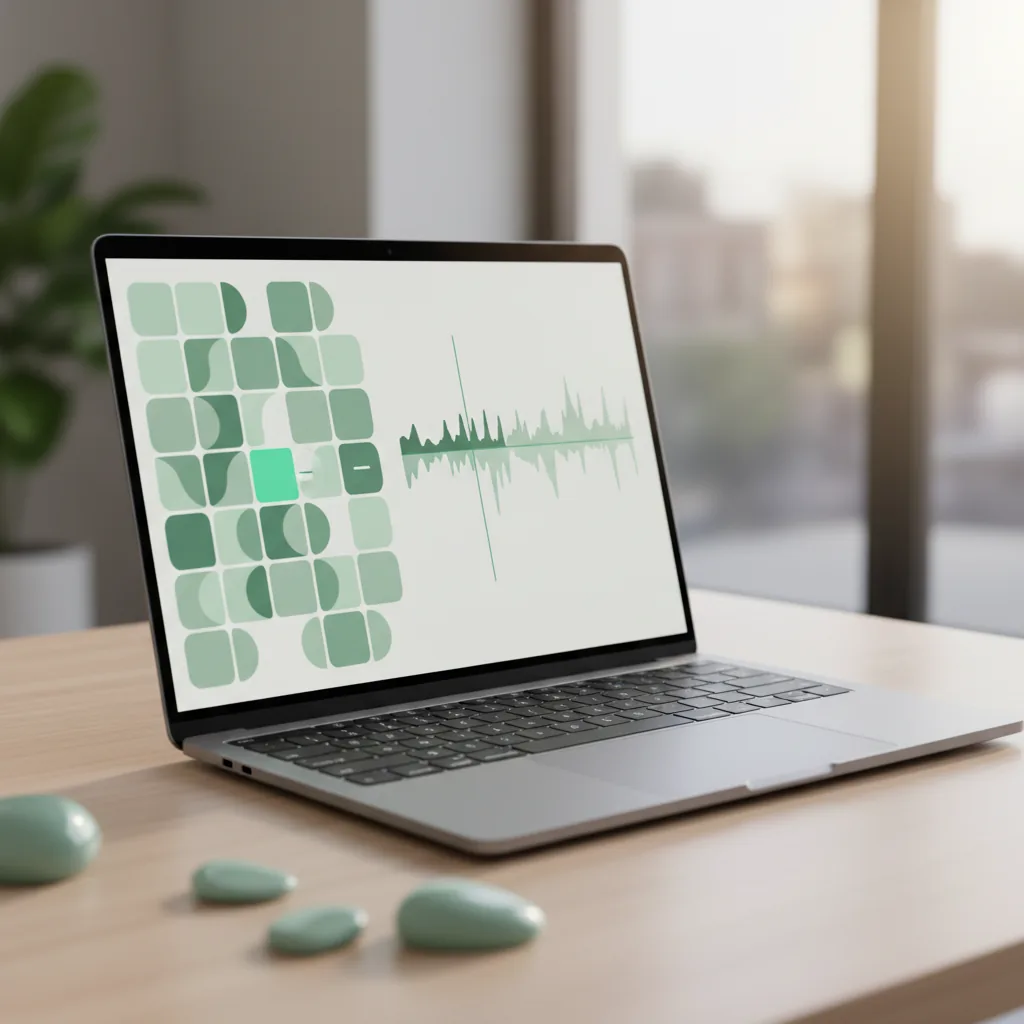
Take a reflex you have mastered since school: proofreading a document. Descript transposes that gesture to AI video editing. Your recording becomes a living transcript, and every backspace stroke is an edit cut. You delete the clumsy sentence, it disappears from the video track at the same time.
The automatic cleanup features do the dirty work for you. Remove Filler Words hunts down ums, uhs and repetitions, Shorten Word Gaps tightens silences, Edit for Clarity chains together the obvious cuts. On a raw thirty-minute screencast, I get a fluid version in a fraction of the time of traditional editing.

Underlord, the built-in assistant, pushes the concept further: it structures your scenes, suggests cutaways and can draft posts or descriptions from your content. We are far from the perfect magic tool, some suggestions need review, but the direction is right: AI handles the thankless tasks, you keep the decisions.
Remember: if your content is spoken and structured, editing in text is objectively faster than manipulating a timeline.
Descript in French… and other languages: transcription, subtitles and voice
Recurring question: does Descript hold up in French? Transcription supports 25 languages including French, with very decent quality on a clear voice. Multi-speaker detection works too, provided you identify voices manually on the first pass.
Dynamic subtitles generate in one click and can be customized (font, colors, highlighted words), a huge win for social media formats. Translated dubbing exists in 30 languages, French included, but I remain cautious about production results: like any voice AI, accent and rhythm give the machine away on demanding content.
My realistic use of French in Descript: reliable transcription, excellent subtitling, occasional voice fixes through local regeneration. For long-form voiceover in flawless French, I prefer dedicated solutions I cover below.
Descript pricing: which plan for which use?
Now for Descript pricing, checked on the official page on August 23, 2026:
| Plan | Yearly | Monthly | Included |
|---|---|---|---|
| Free | 0 $ | 0 $ | 60 min of media/month, 100 AI credits (one time), 720p export with watermark |
| Hobbyist | 16 $/mois | 24 $/mois | 10 h of media/month, 400 AI credits, 1080p export without watermark, cloned voice |
| Creator | 24 $/mois | 35 $/mois | 30 h of media/month, 800 AI credits, 4K export, full Underlord access |
| Business | 50 $/mois | 65 $/mois | 40 h of media/month, 1,500 AI credits, dubbing in 30+ languages with review, custom avatars |
The business model revolves around two counters: hours of media processed and AI credits consumed by the smart features. That is watch-out number one: an intensive month of generations (multiple clips, repeated Studio Sound, voice regenerations) can push you into your tier’s ceiling.
No official promo code active to my knowledge in August 2026; going yearly remains the safest discount, roughly a third saved depending on the plan [TO VERIFY during promotional periods]. My solopreneur trade-off: Hobbyist covers a reasonable weekly rhythm, Creator only makes sense if you publish almost daily.
Overdub and voice cloning: powerful, needs ethical framing
Voice cloning, historically named Overdub, is now part of Descript’s AI Speech module. You record a sample of your own voice, and the tool can then generate or fix sentences in that voice. Combined with Regenerate, it repairs a botched cut or a swallowed word without going back to the mic.
That power comes with one non-negotiable personal rule: I never clone someone else’s voice, and I only use my clone to fix or complete my own recordings. Consent and traceability are not details, they are the dividing line between creation assistance and manufacturing fake statements.
Used within that frame, the tool is frighteningly effective. A mispronunciation in the middle of an interview? I correct the word, the voice regenerates the fragment, the listener notices nothing. It is exactly the kind of thankless task AI should absorb for us.
My real workflow: Riverside, Descript and ElevenLabs
Concretely, here is the chain I use for my spoken formats. Remote recording starts in my Riverside remote studio, which captures each track in studio quality regardless of guests’ connections. I export the files, then open everything in Descript for transcription, cuts and subtitles.
If a passage must be replaced by a clean voiceover, especially in French, I hand over to ElevenLabs, my go-to AI voiceover tool for publishable narrations. Descript for the mechanics of editing, Riverside for capture, ElevenLabs for voice: each plays its role, none does everything perfectly.
This decoupling is deliberate. A tool claiming to do everything ends up doing everything mediocrely, and I prefer three excellent building blocks connected by a simple flow. If you are assembling your creation stack, start from these links rather than from an over-engineered factory.
Final word
My Descript verdict fits in two lines. For quickly editing spoken content, tutorials, podcasts, social clips, it is today the shortest path between raw recording and publication, and the free plan lets you check it on your own files. For creative, musical or sophisticated multicam editing, traditional software stays ahead.
Try it on your latest recording, the one you have been postponing for weeks for lack of time to edit it. If the document-style editing frees you up like it freed me, moving to the paid plan will justify itself. And to widen the comparison, my selection of AI tools gathers the alternatives tested with the same rigor.
FAQ: frequently asked questions about Descript
Does Descript work well in French?
In French, Descript keeps three promises out of four: yes for transcription (25 languages including French), subtitles and local voice correction. Translated dubbing exists in French among 30 languages, but generated voices keep perceptible artifacts on demanding content.
What Descript pricing should you expect in 2026?
Checked on August 23, 2026: free with 60 minutes of media per month, Hobbyist at $16 per month billed yearly ($24 monthly), Creator at $24 yearly ($35 monthly), Business at $50 yearly ($65 monthly).
Can you use Descript for free sustainably?
Yes, with 60 monthly minutes of media and 100 AI credits offered once, 720p export with watermark. Enough to test AI video editing in real conditions, too tight for regular weekly production.
Does Descript’s AI video editing replace Premiere or CapCut?
No, it replaces the tedious editing of spoken content. For complex creative effects, elaborate multicam or advanced color grading, traditional suites keep a clear technical edge.
Is Descript’s voice cloning ethical?
The tool requires recording your own voice to create your clone, which frames legitimate use. Responsibility stays yours: never a third-party voice without explicit consent, never statements the person never made.
Descript or Riverside: which one to choose?
They are not competitors, and this Descript review confirms it: Riverside captures remote recordings in high quality, Descript edits and publishes afterwards. My workflow combines both, and my full Riverside review details the capture side.


Leave a Reply